

Continuous Penetration Testing: Validate Security as Your Environment Changes
Identify newly introduced weaknesses, reassess critical attack paths, and verify remediation throughout the year—without waiting for the next annual penetration test.
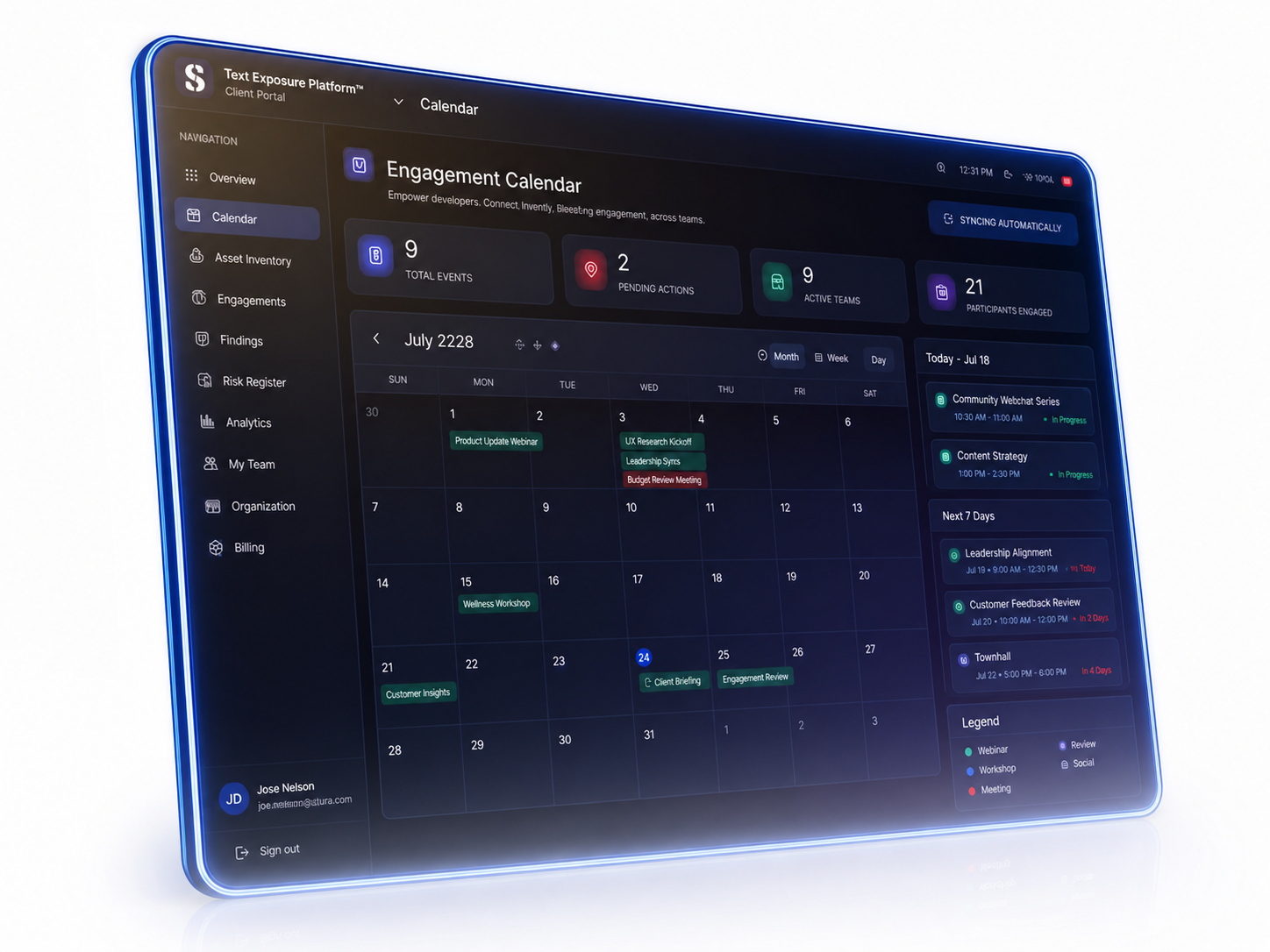
Continuous Penetration Testing
Continuous Penetration Testing extends expert security testing throughout the year rather than concentrating all validation into a single point-in-time engagement.
Teisoft establishes an initial security baseline and performs recurring tests based on an agreed cadence, significant application changes, new releases, emerging vulnerabilities, unresolved findings, or changes in external exposure.
The service combines structured testing cycles, targeted validation, remediation tracking, and retesting while preserving a clearly authorized scope.
Built for Environments That Change Between Annual Assessments
Recurring Risk Validation
Reassess critical applications, APIs, infrastructure, and security controls according to an agreed testing schedule and risk-based scope.
Change-Driven Security Testing
Evaluate material releases, new functionality, architectural changes, integrations, and infrastructure updates before risk remains undiscovered for months.
Continuous Remediation Verification
Retest corrected findings and maintain visibility into vulnerabilities that remain unresolved, partially resolved, or have been reintroduced.
Built Around Your Most Critical and Frequently Changing Systems
Critical Applications and Workflows
Reassess authentication, authorization, sensitive transactions, administrative functions, business logic, and other high-impact application workflows.
APIs and Integrations
Test new or modified endpoints, object authorization, tokens, data exposure, integration trust, restricted operations, and abuse scenarios.
Infrastructure and Cloud Changes
Evaluate newly exposed services, cloud resources, identity permissions, access paths, network controls, and material configuration changes.
Test on a Schedule and When Meaningful Change Occurs
Scheduled Testing Cycles
Conduct recurring assessments monthly, quarterly, or according to another agreed cadence based on risk, release frequency, and testing objectives.
Major Application Releases
Review security after substantial changes to authentication, authorization, sensitive workflows, administrative functionality, or user-facing features.
New APIs and Integrations
Test newly introduced endpoints, partner connections, service accounts, data exchanges, and machine-to-machine trust relationships.
Infrastructure or Cloud Changes
Reassess security following changes to exposed services, network architecture, cloud permissions, hosting environments, or identity controls.
Emerging Vulnerabilities
Perform targeted testing when newly disclosed weaknesses may affect critical technologies or components within the authorized scope.
Remediation Completion
Retest findings after corrective action to confirm whether the original vulnerability and associated attack path have been resolved.
Why a Single Annual Assessment Leaves Security Gaps
Applications Change Between Assessments
New releases, APIs, components, integrations, and configuration changes can introduce weaknesses after the annual test is completed.
Critical Changes May Remain Untested for Months
A significant authentication or authorization change may reach production long before the next scheduled assessment.
Attackers Do Not Follow an Audit Calendar
New exploitation techniques and exposed attack paths can emerge at any point during the year.
FAQs
What is Continuous Penetration Testing?
Continuous Penetration Testing is an ongoing security testing program designed for applications and environments that change more frequently than a traditional annual assessment can cover.
Instead of evaluating security only once a year, Teisoft performs recurring testing and validation according to an agreed schedule, helping organizations identify meaningful exposures as their applications, APIs, infrastructure, and attack surface evolve.
How is Continuous Penetration Testing different from an annual penetration test?
An annual penetration test provides a detailed assessment of the environment at a specific point in time. However, new releases, configuration changes, integrations, and emerging vulnerabilities can introduce risk after the engagement is completed.
Continuous Penetration Testing provides recurring security validation throughout the year. It helps shorten the time between introducing a vulnerability, identifying it, and beginning remediation.
Is Continuous Penetration Testing fully automated?
No. Automated tools may be used to provide recurring coverage and identify changes, but the service is not limited to automated vulnerability scanning.
Teisoft security specialists review relevant findings, perform manual testing where appropriate, evaluate application behavior and attack paths, and provide the expert analysis required to distinguish meaningful risk from unverified scanner output.
How frequently is testing performed?
Testing frequency is defined according to the risk, criticality, and rate of change of the environment.
Business-critical or frequently updated applications may require more frequent testing, while stable systems may follow a different cadence. Testing can also be triggered by significant releases, new functionality, infrastructure changes, or newly disclosed threats that may affect the environment.
Is Continuous Penetration Testing only for companies that release software every week?
No. It is valuable for any organization where an annual test leaves an unacceptable visibility gap.
The service may be appropriate for organizations operating customer portals, e-commerce platforms, APIs, cloud environments, or other critical systems that change throughout the year—even when those changes do not occur every week.
The testing cadence is adapted to the organization rather than requiring a constant development schedule.
How are findings and remediation managed throughout the program?
Findings are maintained with their technical evidence, risk context, remediation guidance, and current treatment status.
Teisoft can track whether exposures remain open, have been remediated and verified as closed, are mitigated through compensating controls, or have been formally accepted or deferred. This provides a continuous view of security progress instead of producing disconnected reports after each testing cycle.
Do Not Let Security Validation Fall Behind Continuous Change
Discuss Your Continuous Testing Program
Build a recurring penetration-testing program around your critical applications, APIs, infrastructure, release cycles, remediation priorities, and security objectives.